Direct Answer
For convenience and fuel retailers, AI readiness depends on the strength of the technology foundation behind them. Organizations that have invested in modern systems, trusted data, clear governance, and disciplined execution are better positioned to extract value from AI than those pursuing standalone AI initiatives. The challenge facing retailers today is less about adopting AI and more about creating the conditions that allow it to deliver meaningful business outcomes.
Key Takeaways
- AI has become a strategic priority across retail, but many organizations continue to struggle with execution and measurable returns.
- Retailers face a growing challenge balancing AI investment alongside modernization, labor, foodservice, payments, loyalty, and security priorities.
- Many of AI's most valuable retail applications already exist in the form of forecasting, personalization, optimization, and decision support.
- Building reliable data, governance processes, and operational consistency remains essential for scaling AI successfully.
- Pilot's transformation journey demonstrates how modernization creates the foundation for future innovation, including AI capabilities.
Walk any trade show floor, attend any executive roundtable or read through any retail technology publication and one topic dominates the conversation: AI. Generative. Agentic. AI assistants. AI-powered experiences.
The excitement is understandable. In convenience and fuel retail, AI has quickly moved from developing technology to boardroom priority. Yet despite growing investment, many organizations continue to face a difficult question: How do you move from AI experimentation to meaningful business impact?
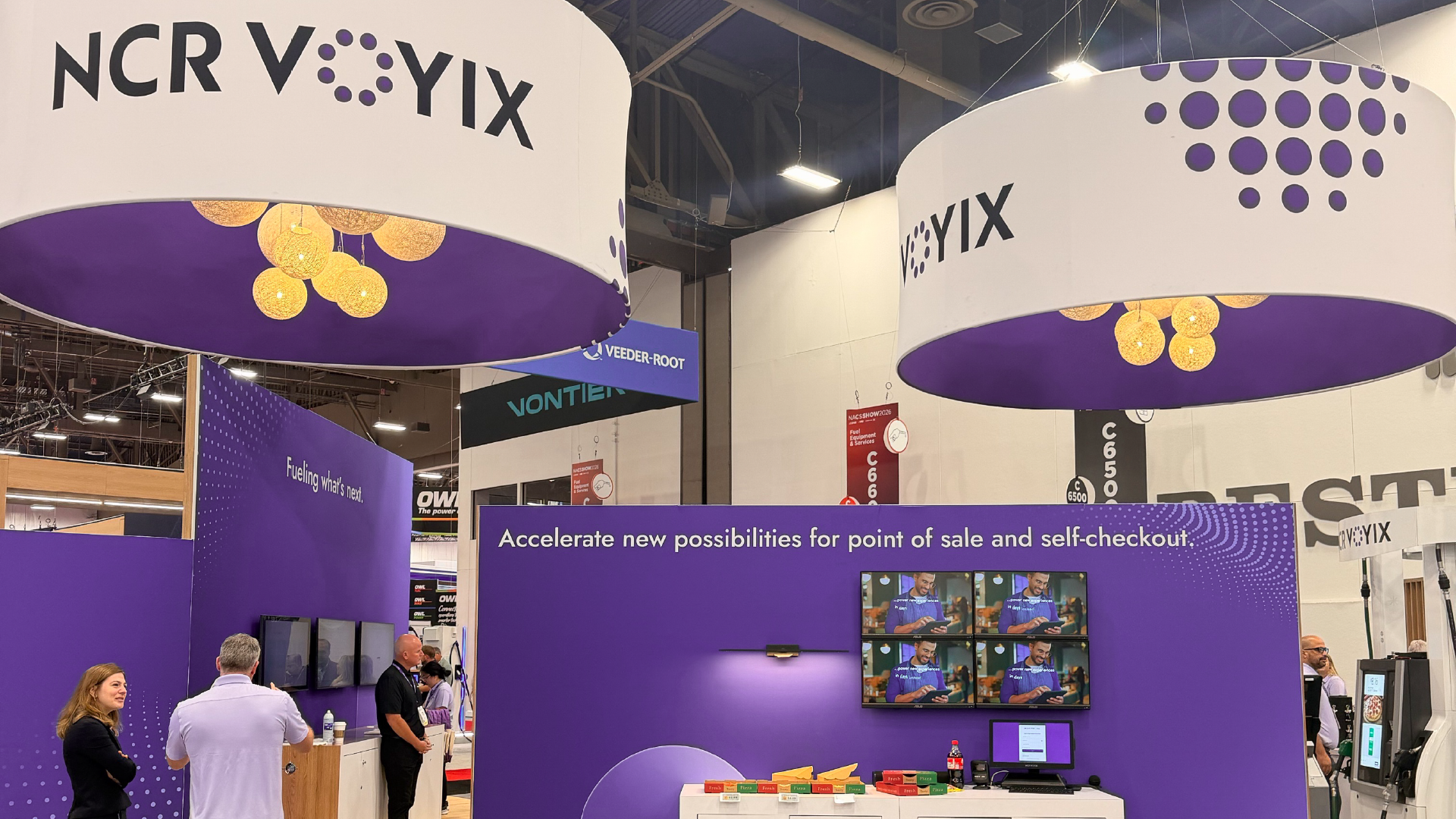
That question was at the center of a recent NACS Show Fireside Chat with Andy Lupo, Chief Commercial Officer at Pilot, and Nick East, Chief Product Officer at NCR Voyix. While the discussion touched on AI, its most important lesson was broader. The retailers making progress today are focused on creating the operational and technology foundations necessary to support continual innovation.
As organizations look for ways to capitalize on AI, many are discovering that readiness begins with a challenge they were already working to solve: modernization.
AI Readiness Begins with Your Operational Challenges
The industry's AI conversation often centers on what is possible. Retail leaders have no shortage of examples demonstrating how AI can improve customer engagement, automate tasks, streamline operations, and accelerate decision-making.
The more difficult conversation involves everything required to make those outcomes possible at scale.
Retailers must simultaneously manage labor challenges, foodservice growth, loyalty initiatives, digital engagement, payments innovation, cybersecurity concerns, and ongoing modernization efforts. Every new initiative competes for the same resources, investment dollars, and organizational attention.
During the NACS Show discussion, Lupo repeatedly stressed the importance of maintaining focus and solving the right problem. The conversation reflected a practical reality facing many convenience retailers today: transformation succeeds when organizations are disciplined about where they invest their energy and how they sequence change.
Viewed through that lens, AI readiness becomes an operational challenge as much as a technological one.
Pilot’s Modernization Journey
The discussion offered a useful example through Pilot's ongoing transformation efforts.
For an organization operating hundreds of locations across North America, modernization extends far beyond replacing legacy technology. The objective is creating a reliable, scalable environment capable of supporting both current operations and future innovation.
Throughout the conversation, Lupo emphasized the importance of approaching technology investments with clear business objectives. Rather than beginning with a new platform, tool, or capability, organizations should first define the problem they are trying to solve.
"Don't go right to AI. Don't go right to the platform. Start with the pain point." - Andy Lupo, Chief Commercial Officer at Pilot
That perspective reflects a challenge facing many retailers today. AI has expanded the list of available technology options, but it has not changed the need for disciplined decision-making. Technology creates value when it addresses operational challenges, improves execution, or enhances the customer experience.
Pilot's modernization efforts with NCR Voyix offer an example of this approach in practice. Earlier this year, Pilot expanded its relationship with NCR Voyix through a long-term agreement to modernize point-of-sale technology across its travel center network. The initiative is designed to help standardize operations, improve resiliency, strengthen security, and create a more flexible foundation for future innovation.
The significance extends beyond the POS itself. Modern retail environments rely on an increasingly interconnected ecosystem of store operations, payments, loyalty, merchandising, foodservice, and customer engagement technologies. Building consistency across that environment creates the conditions for better data, improved visibility, and more effective decision-making.
As retailers evaluate AI opportunities, many are finding that the work required to support AI overlaps significantly with the work required to modernize the business in the first place.
The Most Valuable AI Use Cases Often Receive the Least Attention
Public discussions about AI frequently focus on generative use-cases. Yet some of the most impactful applications in convenience retail have been delivering value for years.
Demand forecasting. Inventory optimization. Labor planning. Customer segmentation. Personalization. Fraud detection.
These capabilities may not generate the same headlines as conversational AI, but they often produce measurable operational results.
One of Lupo's most practical observations centered on how organizations should approach emerging technologies in general. Rather than starting with the technology itself, leaders should start with the problem they need to solve.
That mindset shifts the conversation from: "Where can we use AI?" to: "What business outcome are we trying to improve?"
For retailers, the distinction matters. Technology adoption becomes far more effective when it is connected to clearly defined operational challenges and measurable business goals.
Four Foundations of AI Readiness
If AI readiness is really operational readiness, where should retailers begin?
1. Simplify Complexity
Retail organizations rarely start with a clean slate. Over time, new systems are added, and processes evolve. The result is often a technology environment that becomes more difficult to maintain, scale, and modernize.
When discussing Pilot's transformation journey, Andy Lupo acknowledged the reality facing many retailers:
"You can't fix it all, but I think the key to legacy is you've got to build the foundation right."
That perspective underscores an important lesson for retailers pursuing any new technology—including AI. Success doesn't come from tackling every challenge at once. It comes from identifying the systems, processes, and operational bottlenecks that matter most and building from there. Simplifying complexity often means making deliberate choices about where to focus and creating a foundation that can support innovation without introducing additional friction.
2. Build Trust in Data
For all the excitement surrounding AI, the quality of its outputs remains dependent on the quality of the information feeding it. Retailers have access to more data than ever before across transactions, loyalty programs, inventory systems, fuel operations, labor management, and digital channels. The challenge is ensuring that data is accurate, accessible, and trusted throughout the organization.
During the discussion, Lupo emphasized that foundational work cannot be overlooked. And it’s a sharp reminder that AI readiness isn't simply about adopting new technology. Organizations must first establish confidence in the underlying data that informs decisions.
When leaders can trust the information available to them, they are better positioned to uncover meaningful insights, automate processes, and scale innovation across the enterprise. Without that trust, even the most advanced AI tools struggle to deliver consistent value.
3. Connect Technology to Business Outcomes
One of the most practical themes from the conversation was the importance of tying technology investments directly to business needs. With new AI capabilities announced almost daily, retailers face no shortage of opportunities to experiment. The greater challenge is determining which investments will meaningfully improve operations, customer experiences, or financial performance.
Lupo offered a simple framework for evaluating new technologies:
"Tech can either hurt you or help you. You don't get credit when it works and you take a lot of grief when it doesn't work."
That mindset shifts the conversation from technology adoption to problem solving. Rather than starting with the latest tool and searching for ways to apply it, retailers can begin by understanding the operational challenge they need to address. Whether the objective is improving labor efficiency, reducing friction at checkout, strengthening loyalty engagement, or optimizing inventory management, technology becomes more impactful when it is aligned to a clearly defined business outcome.
In many cases, the most successful AI initiatives are not the most ambitious. They are the ones that solve a specific problem exceptionally well.
4. Create a Foundation for Continuous Innovation
Technology transformation is rarely limited by technology itself. More often, success depends on how effectively people, processes, and systems adapt to change. Modernization requires organizations to manage competing priorities while maintaining day-to-day operations, making adoption just as important as implementation.
Throughout the discussion, Pilot's approach reflected a recognition that transformation is a journey rather than a single project. As Lupo explained when discussing the company's work with NCR Voyix:
"We think that [the NCR Voyix partnership] is going to take us on this journey to be able to simplify the experience, cross-channel understanding of how our guests are performing, have a much more reliable underlying tech stack."
The significance extends beyond technology modernization. Retailers are under constant pressure to meet changing customer expectations, new operating models, and evolving technologies. Building a reliable, scalable foundation creates the flexibility to adapt without constantly reinventing the business. Whether the next opportunity involves AI, automation, personalization, or capabilities that have yet to be released, organizations are better positioned to move forward when the underlying foundation is already in place.
From AI Curiosity to Business Execution
Retail has entered a new phase of the AI conversation. The question is no longer whether AI will influence the industry. It already is. What matters now is whether organizations possess the operational foundation necessary to support it.
Pilot's experience offers an instructive example. The path toward AI readiness runs through many of the same priorities retailers are already addressing today: modernizing infrastructure, improving governance, reducing complexity, strengthening operational consistency, and aligning technology investments with business outcomes.
AI may be the technology capturing attention today. The underlying requirements for success remain remarkably consistent. Organizations that build strong foundations create more flexibility to innovate and scale new capabilities as they’re released.
And in a retail environment where change continues to accelerate, that readiness may prove every bit as valuable as the technology itself.
AI Readiness FAQ for Convenience Retailers.
What is AI readiness in convenience retail?
AI readiness refers to the operational, technological, and organizational capabilities required to successfully implement and scale AI initiatives. This includes data quality, governance, process consistency, leadership alignment, and clear business objectives.
Why are many retailers struggling to realize value from AI?
Many organizations are pursuing AI initiatives while still addressing foundational challenges such as fragmented data, inconsistent processes, and competing transformation priorities. Research shows adoption is moving faster than execution and measurable ROI.
What's the difference between machine learning and generative AI?
Machine learning uses data to identify patterns and make predictions, supporting use cases such as forecasting, personalization, and optimization. Generative AI creates new content, such as text, images, and conversational responses.
Where is AI creating value in convenience retail today?
Some of the most common use cases include demand forecasting, inventory management, loyalty personalization, labor optimization, customer insights, and fraud prevention.
What's the first step retailers should take to improve AI readiness?
Before evaluating new AI tools, retailers should assess the strength of their operational foundations, particularly data quality, governance practices, and alignment between technology investments and business objectives.
この記事をシェアする
関連ブログ記事
小売・飲食業界の重要なトレンドに関する専門的な洞察をさらに詳しくご紹介します。